Luxury has always been about vision. But in today’s fashion economy, vision alone is no longer enough—it must translate into relevance, resonance, and cultural authority. At the center of this delicate balance stands LVMH Moët Hennessy Louis Vuitton, the world’s most powerful luxury conglomerate, quietly but decisively reshaping the future of fashion through one of its most strategic tools: creative leadership.
As consumer expectations evolve and the global luxury market enters a more cautious phase, LVMH is signaling a clear message—heritage must evolve, and creativity must lead with intent.
The LVMH Universe: More Than a Conglomerate
LVMH is not simply a collection of brands; it is a carefully orchestrated ecosystem of maisons, each with its own history, codes, and cultural capital. From Louis Vuitton and Christian Dior to Fendi, Loewe, Celine, and Givenchy, the group controls the narrative of modern luxury across continents.
What differentiates LVMH is not scale alone, but its belief that creative directors are custodians of brand mythology—not just designers of seasonal collections. In recent years, that belief has translated into bold, sometimes unexpected, leadership shifts.
Dior: A Unified Vision for a New Era
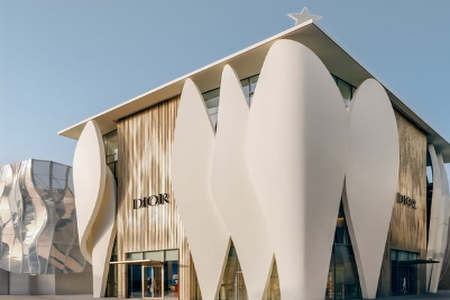
One of the most significant moves came from Christian Dior, a house synonymous with Parisian elegance and couture authority. After nearly a decade under Maria Grazia Chiuri, whose tenure reshaped Dior through a feminist and socially conscious lens, the brand entered a new chapter.
In a historic decision, Jonathan Anderson was appointed sole Creative Director, overseeing women’s wear, men’s wear, and haute couture—an arrangement not seen since Christian Dior himself.
For LVMH, this was not merely a change in personnel; it was a structural statement. The consolidation reflects a desire for creative coherence, where storytelling, silhouette, and symbolism move in one unified direction. Anderson’s reputation for intellectual design and cultural sensitivity positions Dior to speak to a generation that values meaning as much as craftsmanship.
Louis Vuitton: Culture as Currency
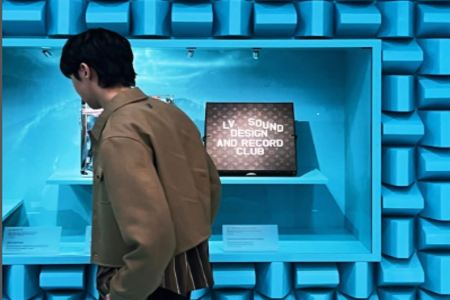
As LVMH’s flagship brand, Louis Vuitton continues to redefine what modern luxury looks like at scale. The appointment of Pharrell Williams as Creative Director of Menswear marked a pivotal shift—one that blurred the lines between fashion, music, and global youth culture.
Rather than relying solely on traditional fashion credentials, Vuitton embraced cultural fluency. Under Pharrell, the brand speaks directly to a global audience that values creativity, collaboration, and cross-disciplinary influence.
Meanwhile, the women’s collections under Nicolas Ghesquière continue to balance innovation with structure, ensuring Vuitton remains both experimental and commercially powerful.
Celine: Refinement Over Reinvention
At Celine, the transition from Hedi Slimane to Michael Rider signals a quieter evolution. Known for its understated sophistication, the brand appears to be leaning into refinement rather than disruption.
LVMH’s approach here reflects strategic restraint—allowing Celine to mature organically while expanding its appeal beyond a singular aesthetic. In an era of logo fatigue, this measured shift positions the house as a sanctuary of modern elegance.
Loewe: When Art Meets Fashion
Few transformations have been as impactful as Loewe under Jonathan Anderson, who elevated the Spanish leather house into a global creative force. His departure marked the end of an era—but not the end of ambition.
By appointing Jack McCollough and Lazaro Hernandez, founders of Proenza Schouler, LVMH reinforced its commitment to intellectual design and artistic credibility. Loewe’s future now lies at the intersection of craft, concept, and contemporary art—an increasingly valuable space in luxury.
Fendi: A Return to Roman Roots
At Fendi, LVMH made a move rooted in emotional intelligence. Maria Grazia Chiuri’s appointment as Chief Creative Officer brings her full circle—back to the house where her career began.
This return is symbolic. Fendi’s identity is deeply tied to Roman craftsmanship, femininity, and legacy. Chiuri’s storytelling-driven approach offers an opportunity to reconnect the brand with its artisanal soul while redefining its voice for modern women.
Why These Shifts Matter Now
Luxury is no longer immune to global uncertainty. Consumers are more selective, more informed, and more values-driven. In this environment, creative directors are not just designers—they are strategists, cultural translators, and brand diplomats.
LVMH’s recent appointments reveal three clear priorities:
-
Unified brand storytelling over fragmented vision
-
Cultural relevance without sacrificing heritage
-
Long-term brand equity over short-term hype
These shifts are not reactive—they are anticipatory.
The Future of Luxury, According to LVMH
As fashion moves away from excess and toward meaning, LVMH is positioning itself ahead of the curve. By empowering designers who understand culture, history, and modern identity, the group is redefining what luxury leadership looks like in the 21st century.
For observers, creators, and consumers alike, one thing is clear:
The next chapter of luxury will be written not just in ateliers—but in ideas.
And LVMH is ensuring it holds the pen.